
Dark Sky Park
Yorkshire Dales Dark Sky Reserve
- Darkness
- Bortle 2–3
- Designation
- Dark Sky Reserve — DarkSky, 2020
- Size
- 2,179 km²
- Location
- North Yorkshire & Cumbria
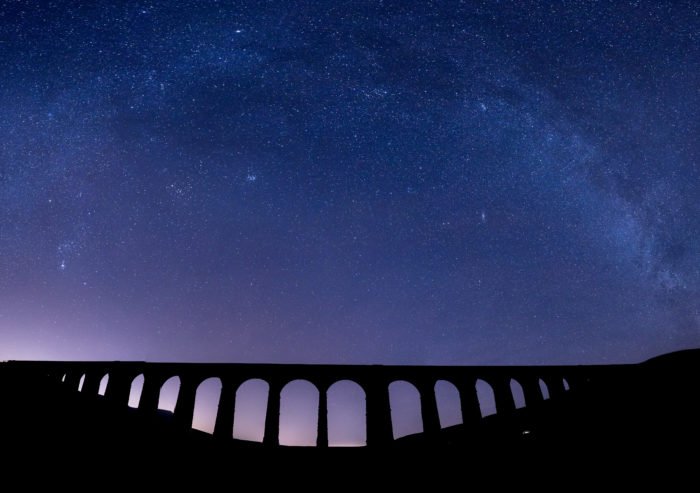
The Yorkshire Dales National Park covers a vast sweep of dales, high moorland and limestone country in northern England. In December 2020 it became an International Dark Sky Reserve, and at almost the full size of the national park it is the largest Dark Sky Reserve in the UK. It was designated at the same time as the neighbouring North York Moors, in a moment that put Yorkshire firmly on the dark sky map, and DarkSky International praised both parks as global leaders in dark sky conservation.
What makes it special is the sheer scale of the darkness. Because the protected area covers almost the whole park, you are rarely far from a genuinely dark sky here. Away from the villages, the open dales and upland moors give you wide, uninterrupted horizons, and on a clear night you can see the major constellations, the planets and the Milky Way with the naked eye, along with occasional appearances from the Northern Lights. The status was hard won: the park had to monitor light levels at more than a hundred sites over three years, and it reports its readings every year to keep the designation.
The reserve runs a Dark Skies Friendly scheme encouraging local places to stay to support stargazers, and its Dark Skies Festival, shared with the North York Moors, is among the best known in the country.
Where to stargaze in the Yorkshire Dales
The park has four official Dark Sky Discovery Sites, all chosen for minimal light pollution, clear sightlines and parking. A few of the best:
- Tan Hill Inn: probably the finest spot in the Dales, and certainly the most characterful. Britain’s highest pub at 1,732 feet, it has wide-open views across the moors in every direction, free parking across the road, rooms, and a roaring fire to warm up beside afterwards.
- Hawes, Dales Countryside Museum car park: an accessible, easy site just outside Hawes, with the pubs and pizzerias of the town nearby for warming up after a session under the stars.
- Malham National Park Visitor Centre: a popular car park site with minimal light pollution, and a short stroll to spectacular Malham Tarn if you arrive before dark.
- Buckden car park: a quiet, dark site in upper Wharfedale with open skies and easy access.
The best time to go stargazing in the Yorkshire Dales
The prime stargazing season runs from around September to May, when the nights are longest, crispest and darkest. The clearest views come on moonless nights well away from the full moon, so aim for a new moon.
Dales weather is the tax you pay for those skies, and this is exposed, high country, so the golden rule is: go when the forecast says go, rather than planning far ahead. Cloud cover and the moon phase matter more than anything else. At remote moor-top spots like Tan Hill, check conditions carefully, people have been snowed in overnight up there.
Two dates worth planning around are the Perseid meteor shower in mid-August and the Geminids in mid-December, the most reliable display of the year. The park’s Dark Skies Festival runs each February and October, shared with the North York Moors, with astrophotography workshops, guided stargazing safaris and night walks, a good way in for first-timers.
Can you see the Northern Lights in the Yorkshire Dales?
Sometimes. Northern England is far enough north that the aurora appears here more often than in the south, though still only on geomagnetically active nights, low on the northern horizon. The park’s dark northern views, from open dales like Swaledale, give you a real chance on the right night. Sign up to aurora alerts, which can usually only predict the aurora a few hours ahead, choose a spot with a clear view to the north, and give your eyes time to adjust.
What to bring stargazing in the Yorkshire Dales
Warm layers, far more than you think. You will be standing still in the cold, often for hours, and the high moors are exposed.
A red-light torch to protect your night vision (a phone torch on a red setting works).
No telescope needed to start. The naked eye and a pair of binoculars reveal a huge amount here.
Check the forecast. Cloud cover and the moon phase matter more than anything else, and at remote spots, check access and conditions before you set out.
Give your eyes 20 minutes to fully adapt to the dark before you judge the sky.
Stargazing events and tours in the Yorkshire Dales
For a beginner, a guided session is the easiest and most rewarding way in. The park’s Dark Skies Festival in February and October, run jointly with the North York Moors, is the highlight, with expert-led stargazing, workshops and walks, and local astronomy groups run public events through the year. Many Dark Skies Friendly places to stay across the park make a night under the stars part of the visit, and some spots, like the Tan Hill Inn, let you stargaze and stay in the same place, so it is worth choosing accommodation deep in the dales and asking about its dark sky credentials.