
Dark Sky Park
Exmoor International Dark Sky Reserve
- Darkness
- Bortle 3–4
- Designation
- Dark Sky Reserve — DarkSky, 2011
- Size
- 693 km²
- Location
- Somerset & Devon
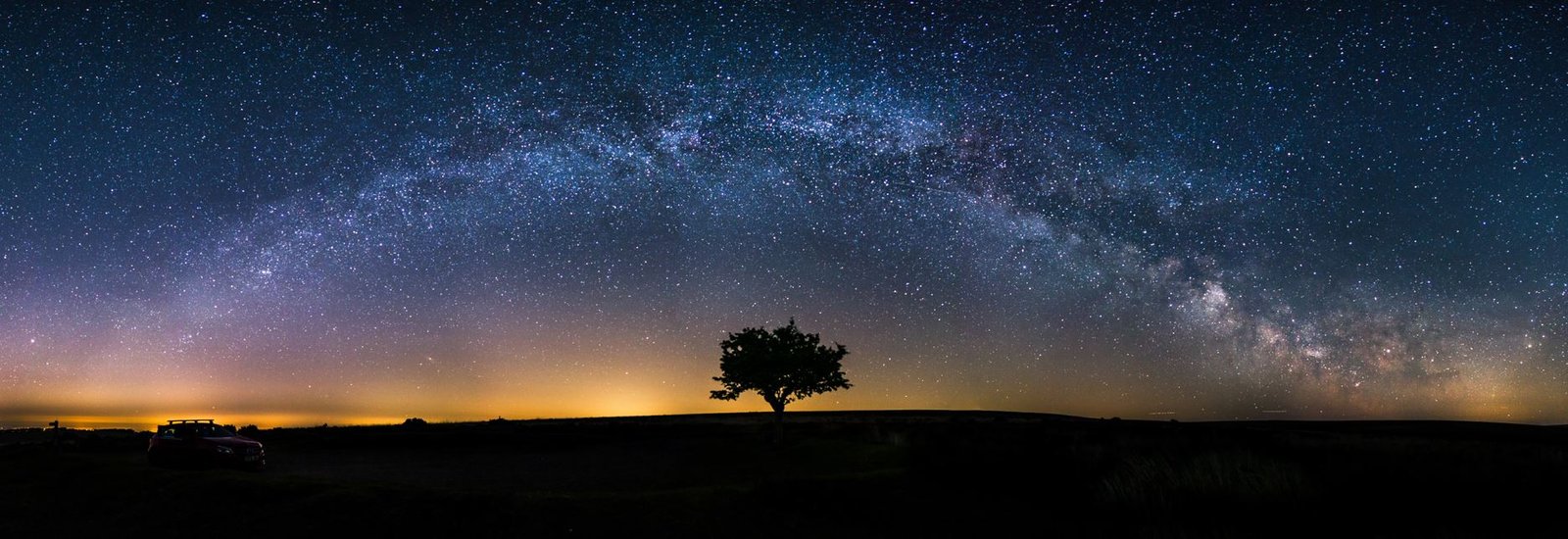
Exmoor National Park covers 267 square miles of moorland, wooded valley and dramatic coastline straddling the border of Devon and Somerset. In 2011 it became Europe’s first International Dark Sky Reserve, recognising some of the darkest and least light-polluted skies in the country. It is a genuine pioneer: at the time it was only the second Dark Sky Reserve in the world.
What makes it special is both the depth of the darkness and the ease of reaching it. Much of the park is free from light pollution, and parts of Exmoor have recorded some of the darkest skies ever measured in England, dark enough in places to reveal the zodiacal light and airglow. On a clear, moonless night you can see thousands of stars and the Milky Way with the naked eye alone, no telescope needed. And unlike the remote northern parks, Exmoor sits within easy reach of southern England, around 90 minutes from Bristol and a long day trip from much of the South West.
Its position on the coast is a real advantage. The south-facing hills and coastal headlands look out over the Bristol Channel, so your view to the north and out to sea is completely free of towns and their glow. The park also has more designated Dark Sky Discovery Sites than any other in the UK, and you can hire a telescope from the National Park Centres to get started.
Where to stargaze in Exmoor
Exmoor has a large number of Dark Sky Discovery Sites, chosen for dark skies, clear horizons and easy access. A few of the best:
- Holdstone Hill: a high coastal headland on the north of the park with sweeping, unobstructed views out over the Bristol Channel and dark skies to the north.
- County Gate: a well-known viewpoint near the Devon and Somerset border, with parking and wide open skies away from any village.
- Webbers Post, near Dunkery: high open ground close to Dunkery Beacon, the highest point on Exmoor, with broad views in most directions.
- Wimbleball Lake: open water and dark surroundings in the south-east of the park, a fine spot for the Milky Way reflected over the reservoir.
Anywhere well away from the villages rewards a look up, but these give you dark skies and somewhere to park.
The best time to go stargazing in Exmoor
The prime stargazing season runs from autumn through to spring, when the nights are longest and darkest. The clearest views come on moonless nights well away from the full moon, so aim for a new moon.
Exmoor’s varied landscape works in your favour. Its mix of coast, moor and valley creates local differences in the weather, so if one area is clouded over, another nearby is often clear. The milder South West climate also makes winter observing more comfortable here than at the northern parks. As always, cloud cover and the moon phase matter more than anything, so go when the forecast says go.
Two dates worth planning around are the Perseid meteor shower in mid-August and the Geminids in mid-December, the most reliable display of the year. Exmoor also runs a popular annual Dark Skies Festival each autumn, with guided stargazing, telescope workshops and astrophotography walks, a good way in for first-timers.
Can you see the Northern Lights in Exmoor?
Rarely. This far south the aurora is uncommon, appearing only on the strongest geomagnetically active nights, low on the northern horizon, and Exmoor’s open coastal views to the north give you as good a chance as anywhere in the region. But the Milky Way, not the aurora, is the real headline here. Sign up to aurora alerts if you want the chance, pick a coastal viewpoint with a clear northern horizon, and give your eyes time to adjust.
What to bring stargazing in Exmoor
Warm layers, far more than you think. You will be standing still in the cold, often for hours, and the coast can be windy.
A red-light torch to protect your night vision (a phone torch on a red setting works).
No telescope needed to start. The naked eye and a pair of binoculars reveal a huge amount here, and you can hire a telescope from the National Park Centres.
Check the forecast. Cloud cover and the moon phase matter more than anything else.
Give your eyes 20 minutes to fully adapt to the dark before you judge the sky.
Stargazing events and tours in Exmoor
For a beginner, a guided session is the easiest and most rewarding way in. The park’s annual Dark Skies Festival each autumn is the highlight, with expert-led stargazing, workshops and walks, and the National Park Centres hire out telescopes year-round and offer their own astronomer’s guide to the best sites. Several dark sky friendly places to stay across Exmoor make a night under the stars part of the visit, so it is worth choosing accommodation away from the towns and asking about its dark sky credentials.