
Dark Sky Park
Eryri (Snowdonia) Dark Sky Reserve
- Darkness
- Bortle 2–3
- Designation
- Dark Sky Reserve — DarkSky, 2015
- Size
- 2,176 km²
- Location
- North Wales
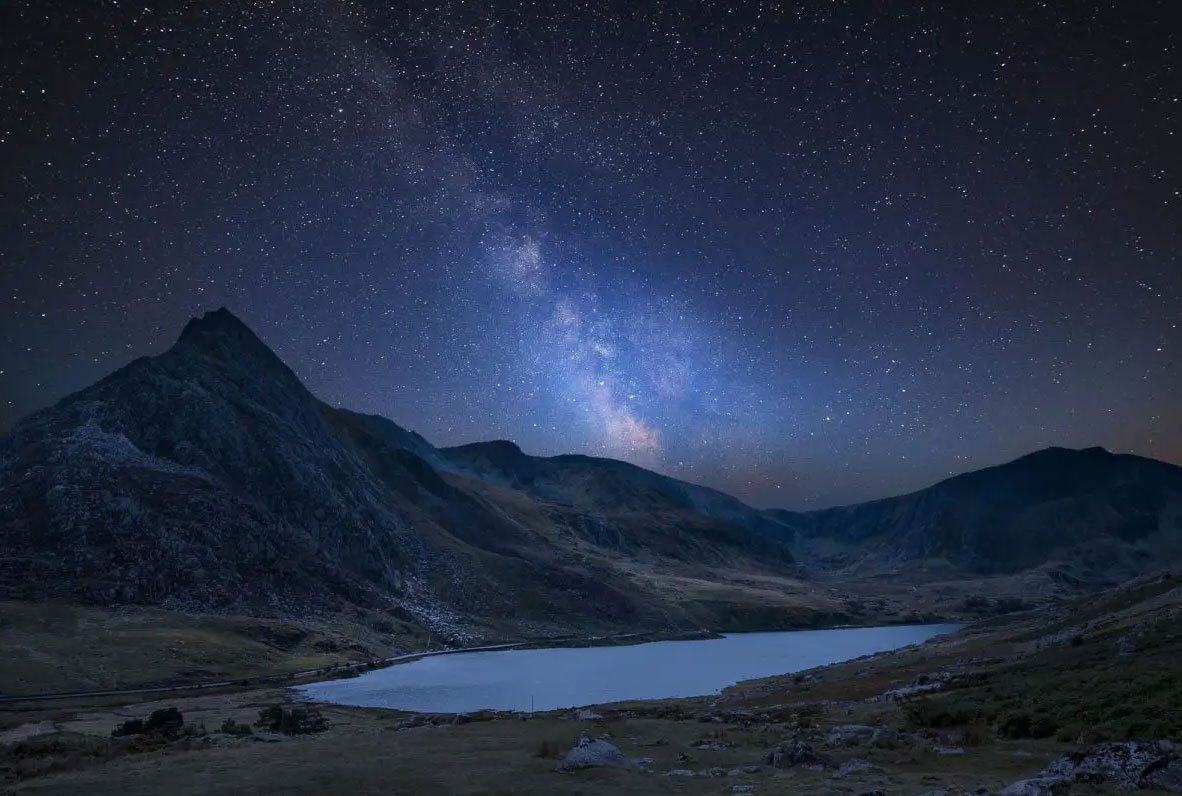
Eryri, still widely known as Snowdonia, covers 2,176 square kilometres of mountain, forest and valley in North Wales. In 2015 it became an International Dark Sky Reserve, and at more than 2,000 square kilometres it is the largest Dark Sky Reserve in the UK. DarkSky International recognises it as one of the darkest places remaining in southern Britain.
What makes it special is the depth of its darkness. The park’s combination of high mountains and uninhabited interior valleys means that once you are more than ten minutes from a village, the sky opens up completely, reaching Bortle 2 to 3 in its darkest reaches. On a clear, moonless night you can see the Milky Way, all the major constellations, shooting stars and even nebulae, the bright clouds of gas and dust, with the naked eye. With 90 summits over 2,000 feet, the higher you climb, the more sky there is.
There is a rare bonus here too. Just off the tip of the Llŷn Peninsula lies Ynys Enlli (Bardsey Island), Europe’s only International Dark Sky Sanctuary, the darkest designation there is. Between the reserve and the sanctuary, this corner of Wales holds some of the most protected night sky in the world.
Where to stargaze in Eryri
You will find dark skies across the whole park, but a few spots stand out for their darkness, open views and easy access.
- Llyn Geirionydd: a forest-ringed lake in the Gwydyr Forest above Betws-y-Coed, reached by a narrow minor road, with a car park, toilets and picnic benches. Many local astronomers rate it the clearest dark sky view in the entire park.
- Llynnau Cregennen: twin lakes on the flanks of Cadair Idris in the south, possibly the moodiest in the park. The still water mirrors the night sky, which makes this one of the most photogenic stargazing spots in Britain.
- Bwlch y Groes: the highest surfaced mountain road in Wales, “The Pass of the Cross,” between Dinas Mawddwy and Llanuwchllyn, rising to 546 metres for wide, crystal-clear skies.
- Llyn y Dywarchen: a small, quiet lake above Drws-y-Coed in the Nantlle valley, with very low surrounding light and a car park nearby.
The best time to go stargazing in Snowdonia
The prime stargazing season runs from autumn through to spring, when the nights are longest and darkest. The clearest views come on moonless nights well away from the full moon, so aim for a new moon.
Welsh mountain weather is the tax you pay for those skies, so the golden rule is: go when the forecast says go, rather than planning far ahead. Cloud cover and the moon phase matter more than anything else, and higher ground can sit above valley cloud on the right night.
Two dates worth planning around are the Perseid meteor shower in mid-August and the Geminids in mid-December, the most reliable display of the year.
Can you see the Northern Lights in Eryri?
Occasionally. North Wales is far enough south that the aurora is uncommon, but on the strongest geomagnetically active nights it can appear low on the northern horizon, and the park’s dark north-facing coastline gives you a chance. The Milky Way, not the aurora, is the real draw here. Sign up to aurora alerts, choose a spot with a clear view to the north, and give your eyes time to adjust.
What to bring stargazing in Eryri
Warm layers, far more than you think. You will be standing still in the cold, often for hours.
A red-light torch to protect your night vision (a phone torch on a red setting works).
No telescope needed to start. The naked eye and a pair of binoculars reveal a huge amount here.
Check the forecast. Cloud cover and the moon phase matter more than anything else.
Take a map, and plan your route in daylight. The best spots are on remote mountain roads, so know where you are going before dark.
Give your eyes 20 minutes to fully adapt to the dark before you judge the sky.
Stargazing events and tours in Eryri
For a beginner, a guided session is the easiest and most rewarding way in. Local astronomy providers run stargazing events, guided night walks and astrophotography workshops through the season, and many dark sky friendly places to stay within the park offer telescope loan or guided sessions. Choose accommodation away from the towns and ask about its dark sky credentials to get the darkest skies right on your doorstep.