
Dark Sky Park
Galloway Forest Dark Sky Park
- Darkness
- Bortle 1–2 (SQM 22+ recorded)
- Designation
- Gold Tier Park — DarkSky, 2009
- Size
- ~780 km² (300 sq miles)
- Location
- Dumfries & Galloway, Scotland
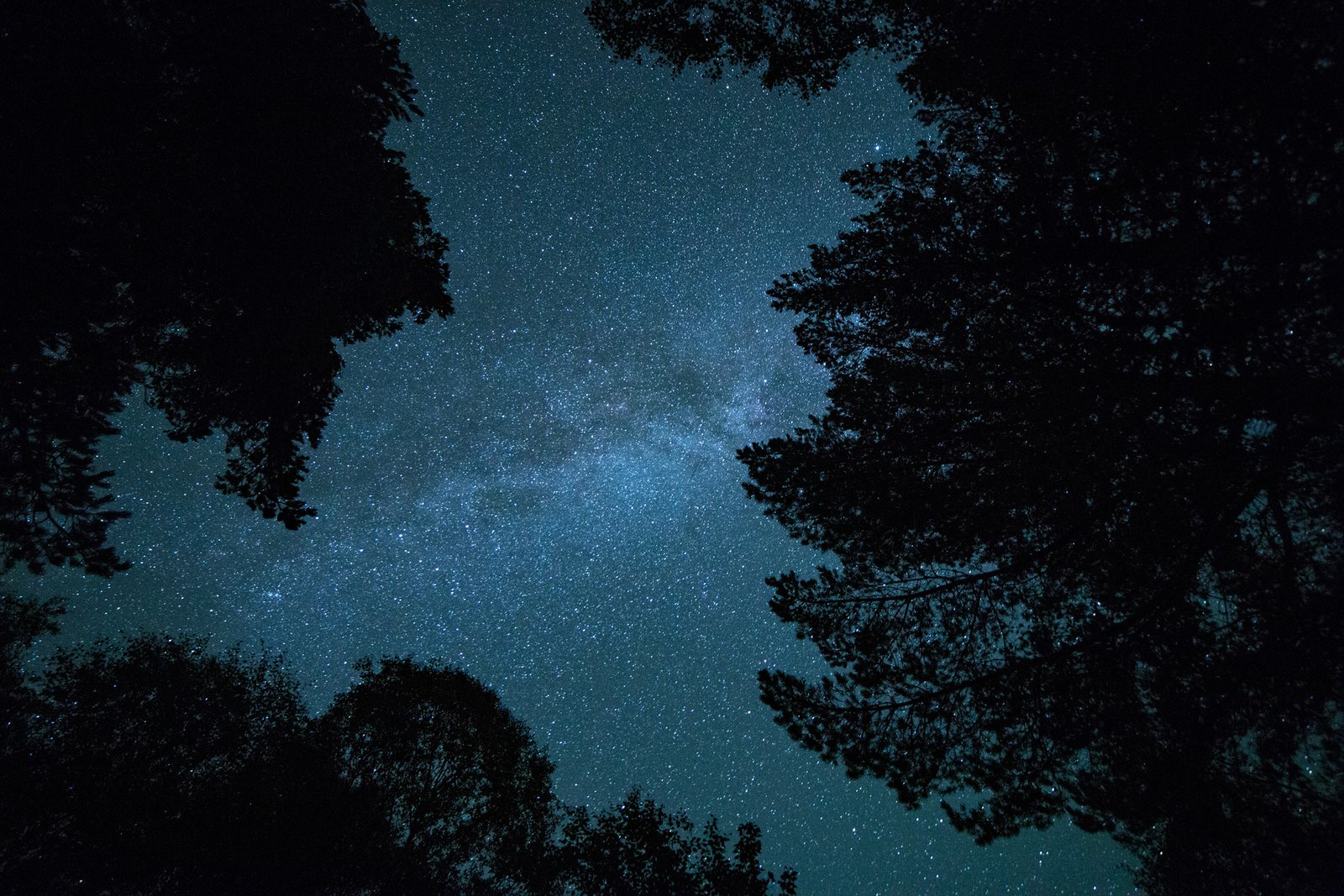
Galloway Forest Park covers around 780 square kilometres (300 square miles) of forest, loch and hill in south-west Scotland, sixteen forests with almost nobody living inside them. In 2009 it became the first area in Britain to be designated a Dark Sky Park by the International Dark Sky Association, and Europe’s first too. It was also awarded Gold Tier status, the highest there is, for the rare quality of its skies.
What makes it special is its emptiness. So few people live here that light pollution barely registers, and the core zone around Clatteringshaws Loch reaches Bortle 2 on the best nights. On a clear, moonless night over 7,000 stars and planets are visible with the naked eye, and the bright band of the Milky Way arcs across the sky, bright enough at its best to cast a faint shadow. The zodiacal light is visible in spring and autumn, and airglow near the horizon is detectable on the best nights.
The park rewards a visit at any time of year, and Dark Sky Rangers run guided events and telescope sessions through the season. It is remote without being cut off: roughly 2 hours from Glasgow, 2.5 from Edinburgh and 90 minutes from Carlisle. Close enough for a weekend, far enough that the cities’ glow never reaches the sky overhead.
Where to stargaze in Galloway Forest Dark Sky Park
You will get a good view from almost anywhere inside the park, but a few spots stand out for dark skies, open sightlines and easy access.
- Clatteringshaws Loch: the dark heart of the park, where the sky reaches its Bortle 2 best. Open water to the south gives you a wide, unobstructed horizon and still reflections on a calm night.
- Kirroughtree Visitor Centre: a natural starting point on the park’s south-eastern edge, with information points to help you identify the constellations and planets overhead.
- Glen Trool: a scenic base in the north, beneath the high hills, and one of the quietest corners of the park for skies with no interruption at all.
- Loch Doon: a long, remote loch on the northern edge, with wide views and a real sense of solitude.
The best time to go stargazing in Galloway
Because it sits so far north, the park never gets fully, astronomically dark at the height of summer (roughly late May to mid-July). The prime stargazing season runs from August through to April, and the darkest views come on clear, moonless nights well away from the full moon.
Scottish weather is the tax you pay for those skies, so the golden rule is simple: go when the forecast says go, rather than planning far ahead. Winter brings the crispest, clearest nights, and the best chance of the aurora.
Two dates worth planning around are the Perseid meteor shower in mid-August and the Geminids in mid-December, the most reliable display of the year. The South of Scotland Dark Sky Festival (9 to 18 October 2026) also fills the park with guided walks, talks and stargazing events, and is a good way in for first-timers.
Can you see the Northern Lights in Galloway Forest Park?
Yes, on geomagnetically active nights. The aurora appears low on the northern horizon, and the park’s darkness and open, north-facing viewpoints give you a real chance several times a year. Sign up to aurora alerts, choose a spot with a clear view to the north, and give your eyes time to adjust.
What to bring stargazing in Galloway
Warm layers, far more than you think. You will be standing still in the cold, often for hours.
A red-light torch to protect your night vision (a phone torch on a red setting works).
No telescope needed to start. The naked eye and a pair of binoculars reveal a huge amount here.
Check the forecast. Cloud cover and the moon phase matter more than anything else.
Give your eyes 20 minutes to fully adapt to the dark before you judge the sky.
Stargazing events and the Scottish Dark Sky Observatory
For a beginner, a guided session is the easiest and most rewarding way in. The park’s Dark Sky Rangers run regular public events and telescope sessions. The Scottish Dark Sky Observatory, originally located near Loch Doon, is being rebuilt at Clatteringshaws Loch within the park and is expected to reopen in late 2026 after a major redevelopment. In the meantime, the park’s two visitor centres at Kirroughtree and Glen Trool provide starting points for self-guided stargazing.