
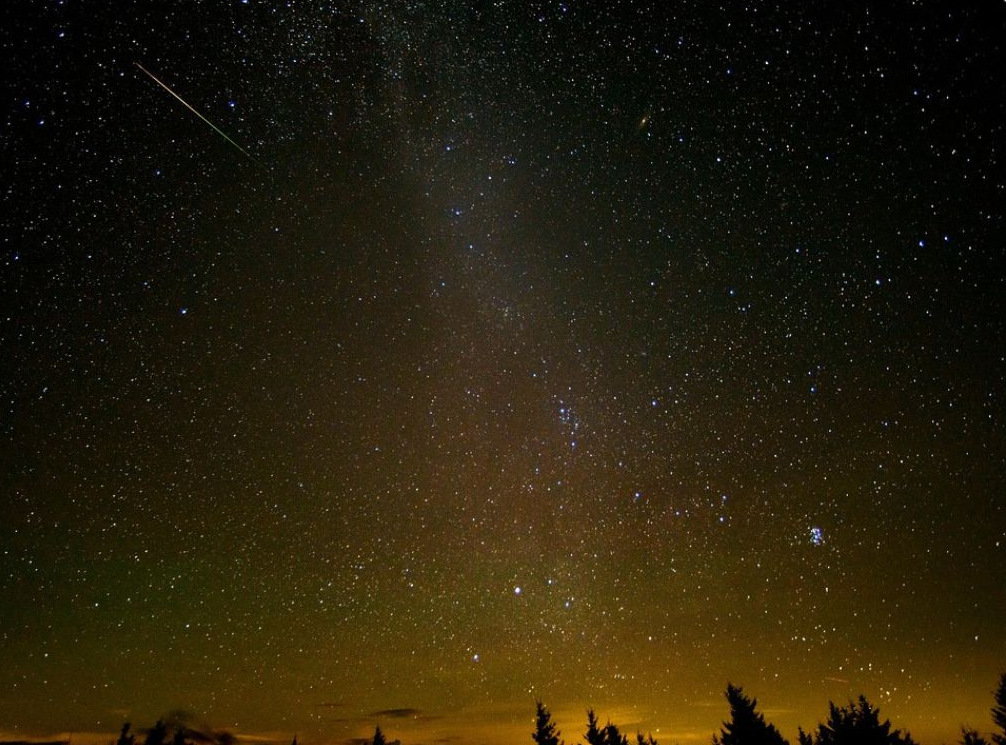
Northern Taurid Meteor Shower
What are the Northern Taurids?
The Northern Taurids are one of two meteor showers created by debris from Comet Encke. Earth passes through a wide stream of dust and rock left by the comet, and because the stream is so broad, we meet it in two parts: the Southern Taurids, peaking in early November, and the Northern Taurids, peaking about a week later.
Both branches appear to come from the constellation Taurus. The Northern Taurid radiant sits a little further north, closer to the Pleiades, which is how the shower gets its name.
For the full story of Comet Encke and the Taurid stream, see our guide to the Southern Taurid meteor shower.
What to expect
Like their southern twin, the Northern Taurids are a quiet shower, with around five meteors an hour at best. Their appeal is in the type of meteor: slow, graceful streaks and the occasional fireball, a meteor bright enough to outshine every star and planet.
Taurid particles enter the atmosphere at around 17 miles per second, much slower than showers like the Leonids, so a Taurid fireball can drift across the sky for several seconds. In some years, Earth passes through a denser cluster of larger debris, and fireballs become noticeably more common.
When to see the Northern Taurids
The Northern Taurids are active from around 20 October to 10 December, peaking on the night of 11–12 November. As with the Southern Taurids, the peak is broad, so any clear, dark night in the week or so around 12 November gives you a good chance.
Taurus rises in the early evening in November, so you can start looking from mid-evening. The best time is around midnight, when Taurus is high in the south.
Because the two Taurid branches overlap from late October to mid-November, a single clear night in that window can bring meteors from both.
How to find the radiant
Look for the Pleiades, the small, misty cluster of stars that looks like a tiny dipper, high in the south-east to south in mid-evening. The Northern Taurid radiant lies just below and to the right of it, near the bright orange star Aldebaran.
You don’t need to look straight at the radiant. Meteors can appear anywhere in the sky. If you trace a slow meteor back and it points towards Taurus, it’s a Taurid.
What you’ll actually see
How many Northern Taurids you see depends on how dark your sky is. These are typical counts per hour on a clear night with no Moon:
- Town or city (Bortle 6–9): 1 or fewer
- Village or rural edge (Bortle 4–5): 2–3
- Dark sky park or reserve (Bortle 1–3): up to 5, plus fainter meteors
Every stay on Starnook is rated on the Bortle scale, so you know how dark the sky will be before you go.
How to watch the Northern Taurids
- Find a dark spot. Fireballs are impressive anywhere, but a dark sky lets you see the fainter Taurids too.
- Wrap up warm. Mid-November nights are cold, especially in the hills. Wear a hat, gloves and layers.
- Get comfortable. A reclining chair or mat makes it easy to watch for an hour or more.
- Give your eyes time. Allow about 20 minutes to adapt to the dark, and keep your phone off or on red night mode.
- Be patient. At around five meteors an hour, this is a shower for quality over quantity.
Where to watch the Northern Taurids in the UK
The UK has some of the darkest skies in Europe, protected in a network of International Dark Sky Parks and Reserves across England, Scotland and Wales. Explore all the UK’s dark sky places to find the one nearest you, or browse all our dark-sky stays to find somewhere you can step straight outside after dark.
Northern Taurid meteor shower FAQs
When do the Northern Taurids peak?
Around the night of 11–12 November, with the shower active from about 20 October to 10 December.
How many meteors will I see?
Around five an hour at best. It’s a gentle shower, best known for slow meteors and the occasional fireball.
What’s the difference between the Northern and Southern Taurids?
They come from the same debris stream left by Comet Encke. The Southern Taurids peak in early November and the Northern Taurids around 12 November, from a slightly different part of Taurus.
Can I see both Taurid showers on the same night?
Yes. They overlap from late October to mid-November, so a clear night in that window can bring meteors from both.
Do I need a telescope?
No. Meteors are best seen with the naked eye.